
Building a DIY Lawn Care Routine From Scratch
Quick Answer
Build it in layers rather than all at once. Three weekly habits carry most of the result and four seasonal jobs do the rest. Start with mowing height alone for a month — it is free, it has the largest effect of anything on this page, and a routine that survives is worth more than one that is complete on paper.
Weekly — the three that matter
- Mow at the correct height for your grass, one-third rule
- Return clippings — up to 30% of seasonal nitrogen, free
- Check whether the lawn actually needs water before watering
Seasonal — the four that finish it
- One well-timed autumn feeding
- Core aeration, if a spade meets resistance
- Overseeding to hold density
- Soil test every three to four years
That is the whole routine. The reason most lawn care advice feels overwhelming is that it lists everything a lawn could receive rather than the small number of things that determine how it looks.
Build It in Layers
Shot: A mower with the cutting deck set high on a dense, healthy lawn.
Alt text: A mower set to a high cutting height on established turf.
The most common way a new routine fails is not neglect — it is starting with six habits in the same fortnight. Add them in order of impact, and let each one become automatic before the next arrives.
| When | Add | Why here |
|---|---|---|
| Month 1 | Mowing height, and only that | Largest single effect on the lawn. Free. Already part of your week |
| Month 2 | Return clippings — stop bagging | Zero extra effort, recycles a meaningful share of the nitrogen |
| Month 3 | Watering judgement — check before you water | Saves water and builds deeper roots. Buy a rain gauge |
| Before autumn | Soil test | Sets the fertilizer decision. Do it before buying anything |
| Early autumn | One feeding at the soil-test rate | The single best fertilizer window of the year for cool-season grass |
| Early autumn | Aerate and overseed, if needed | Same window. Only if the spade test and density say so |
| Year two | Refine — timing, species, thatch | Once the base is automatic, adjustments actually stick |
The Weekly Three
If you only ever do three things
- Mow at the top of your grass type's range — 2.5–3 in for bluegrass, ryegrass and fine fescue, 2.5–4 in for tall fescue — and never remove more than a third of the blade.
- Keep the blade sharp. A dull blade tears rather than cuts, and ragged tips lose more water and invite disease.
- Leave the clippings. They supply up to about 30 percent of the lawn's seasonal nitrogen and do not cause thatch.
Watering is the third weekly habit, and mostly it is a decision not to. Roughly an inch a week including rainfall, applied deeply and infrequently, is the standard guidance — measured with a rain gauge rather than estimated. Check with a spade whether it reached root depth. Most established lawns need no irrigation except in drought.
The Seasonal Four
These are half-days, not habits, and three of the four cluster in the same autumn window — which is convenient, because it means one weekend covers most of the year’s non-weekly work.
- Autumn feeding. Early September is the strongest window for cool-season grass. Apply at the rate your soil test indicates, in pounds of actual nitrogen per 1,000 sq ft.
- Core aeration. Only if a spade resists in moist soil. Around nine cores per square foot, and only tools that remove cores count.
- Overseeding. Same window, ideally straight after aeration while the holes are open. Roughly 1.5 times the package rate.
- Soil test. Every three to four years, and before any renovation.
Calendar Jobs vs Trigger Jobs
The distinction that stops a routine becoming a chore
What to Leave Out
In the routine
- Mowing height, every week, without exception
- Clippings returned
- One autumn feeding at a soil-test rate
- Aeration and overseeding only when the lawn indicates a need
- A rain gauge and a soil thermometer
Leave these out
- Routine preventative insecticide or fungicide applications
- Weed-and-feed products — they compromise the timing of two separate jobs
- Dethatching a lawn whose thatch is under half an inch
- Spring fertilizing before the soil has genuinely warmed
- Watering on a fixed schedule regardless of rainfall
Common Questions
Setting Your Calendar
If it is spring or summer, start with mowing height this week and add nothing else until it is automatic. Order a soil test in the meantime so the autumn decision is ready.
If it is late summer or early autumn, you are at the busiest and most valuable point of the year — feed, and aerate and overseed if the lawn needs them. Then let the weekly three carry it until next autumn.
For the full week-by-week and season-by-season versions, see our weekly checklist and seasonal schedule. If you want the absolute minimum instead, our low-effort guide strips it further.
About the Author
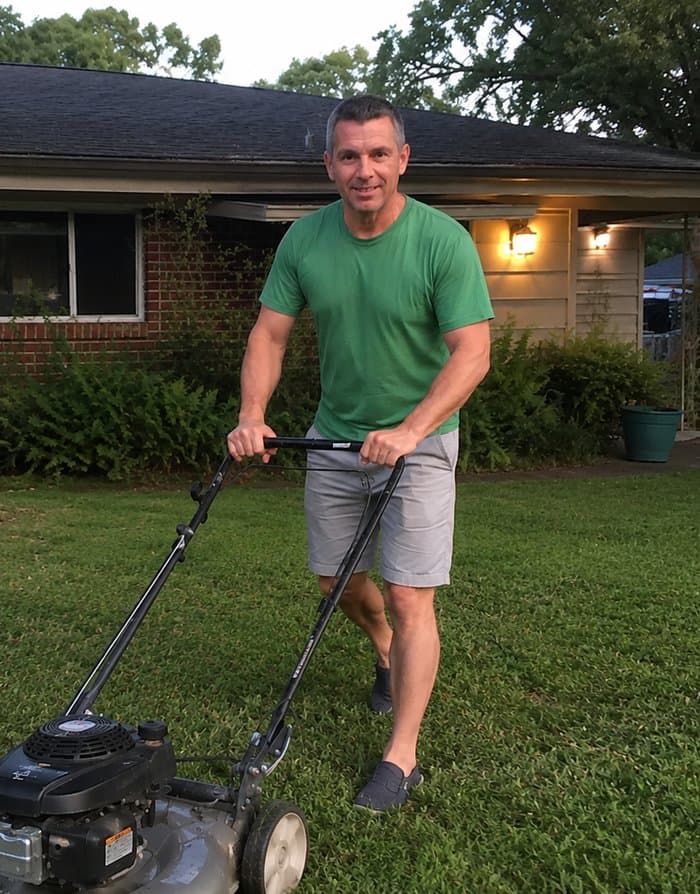
Jack is a lawn care researcher and former landscaping crew lead with 20+ years working transition-zone turf. He writes every guide here from university extension publications and turfgrass research rather than product marketing — after learning the hard way that most of what gets passed around on job sites is backwards.
Have a question or topic suggestion? Get in touch.
Sources and further reading
- Ohio State University Extension — Natural Organic Lawn Care (HYG-4031) (mowing heights, the one-third rule, clippings supplying seasonal nitrogen, aeration requirements, overseeding rates, thatch thresholds, and watering guidance)
- Penn State Extension — Lawn Soil Fertility Management (annual nitrogen requirements and the early-autumn application window)
- University of Maryland Extension — Organic Lawn Care and Supporting Pollinators (soil testing as part of any programme, phosphorus restrictions, and why weed-and-feed products are not recommended)
Timing varies with grass type and climate; your county extension office can give dates for your area. How we research and review guides is set out in our editorial policy.