
Trust & Transparency
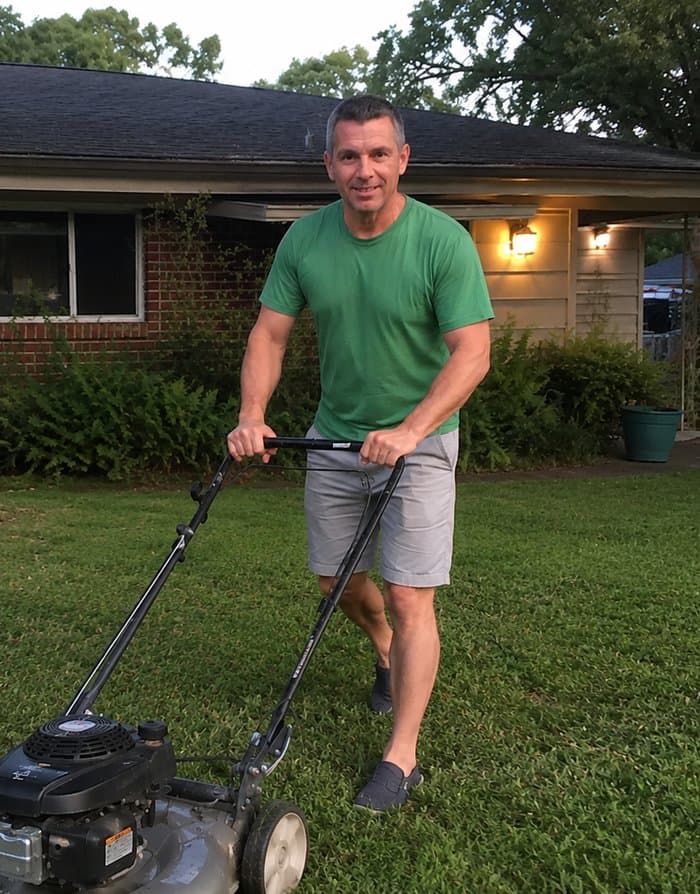
Meet Jack — the guy behind Lawn Expert Jack
Twenty-some years of mowing, killing weeds by trial and error, and eventually figuring out how to do it right. This site is everything I wish someone had handed me when I started.
Based in
The Midwest, transition zone turf
Experience
20+ years, lawn crew to consulting
Specialty
Cool/warm-season transition lawns
Favorite tool
A soil probe — cheapest thing in the shed
How it all started
I didn't grow up dreaming about grass. Nobody does. What I grew up with was a grandfather who treated his half-acre like it owed him money. He was retired Army, precise about everything, and his lawn was the one thing in the neighborhood people slowed their cars down to look at. I spent every summer from about age eight to fourteen behind a push mower on that lawn, and I hated it. It was hot, it was boring, and the stripes had to be perfect or I'd be sent back out to redo them.
What I didn't realize until years later was that he was teaching me something. Not just how to mow — anyone can push a mower in a straight line eventually — but how to actually look at a lawn. He'd crouch down in random spots and pull up a plug of grass, roots and all, and just study it. He'd tell me why one corner was thinning out (too much shade from the neighbor's maple, not enough of a drainage grade) and why another patch always grew in thicker and greener than the rest (it used to be where the doghouse sat, and the soil there was still loaded with nitrogen). He never had a fancy explanation. He just paid attention.
I mowed lawns around the neighborhood for spending money in high school, then kept doing it through two years of community college because it paid better than the jobs my friends had. Somewhere in there it stopped being a summer job and started being the thing I was actually good at. I got hired onto a small landscaping crew at nineteen, mostly doing mowing routes and mulch installs, and within a few years I was running routes of my own and getting asked questions I didn't have real answers for. Why is this lawn yellow. Why did the fertilizer burn it. Why does the neighbor's grass look better with half the effort. I got tired of guessing.
The lawn that almost broke me
Every person in this business has a story like this, and mine happened about six years into running my own small crew. I took on a new client — a young couple who'd just bought their first house — and promised them a green lawn by early summer. I did everything I'd been taught by other guys on the crew: heavy nitrogen every few weeks, watered it daily, mowed it short so it'd "look neat." By July it was patchy, thin, and crawling with a fungus I couldn't identify. I'd done more damage than the weeds ever would have.
That was the point where I stopped trusting "what everybody does" and started actually reading. University extension publications, turfgrass science papers, anything I could get my hands on that wasn't written by someone trying to sell me a bag of fertilizer. It turned out almost everything I'd been doing was backwards — mowing too short stresses the roots, daily shallow watering trains grass to be fragile, nitrogen without a soil test is a guess dressed up as a plan. I went back to that couple's yard, apologized, and started over the right way: soil test first, correct grass species for the site, a mowing height that actually protected the roots, and watering deep and infrequent instead of daily. It took a full season to fix what six weeks of bad habits had broken.
That lawn taught me more than any client before or since. I still think about it every time I write a guide for this site.
"A lawn doesn't care how confident you are. It only responds to what's actually true about soil, water, and light. Everything else is noise."
Turning a hobby into a craft
After that season, I did things differently. I got certified through a state pesticide applicator program so I could legally and safely handle herbicides and fungicides for clients. I sat in on turfgrass management courses at a local extension office. I started keeping a notebook — an actual paper notebook, then eventually a spreadsheet — logging every lawn I worked on: grass type, soil pH, what I applied and when, and what happened afterward. Ten years of that notebook taught me more than any single article ever could, because it forced me to track outcomes instead of just following instructions on a bag.
Eventually the crew grew into a small local lawn care and consulting business. I stopped doing every mow myself and started spending more time diagnosing problem lawns — homeowners would call me out for a single visit just to figure out what was wrong and what to actually do about it, not to sell them a service contract. Those consulting visits are where I found out how much bad information is out there. People were following advice from big-box store employees, forum posts from a different climate zone, or product labels written by marketing teams, not agronomists. Almost every "disaster" lawn I got called out to see had the same root cause: someone followed advice that wasn't wrong everywhere, just wrong for their grass, their soil, or their region.
Why I built Lawn Expert Jack
I started writing things down for clients — one-page cheat sheets on when to fertilize, how to spot grub damage versus drought stress, how often to actually water. People kept asking if I had more. Eventually a client half-joked that I should "just put it all online so people stop paying you to repeat yourself." That joke turned into this site.
Lawn Expert Jack exists because I got tired of watching good money and good weekends get wasted on advice that sounds confident but isn't actually grounded in anything. Every guide here starts from the same place my consulting visits did: what does the research actually say, what have I personally seen work on real lawns, and where does regional or grass-type nuance change the answer. I'm not trying to sell you a miracle product. I'm trying to save you a season the way I wasted one, years ago, on a young couple's first lawn.
My philosophy, in short
- Soil first, always. A soil test costs less than one bag of the wrong fertilizer and tells you more than any product label ever will.
- Right grass, right region.Half of the "my lawn won't thicken up" questions I've ever gotten come down to fighting a grass species that was never suited to that yard's sun, soil, or climate.
- Patience beats intensity. Lawns respond to consistent, correctly-timed care over a season, not aggressive one-time fixes.
- No shortcuts that skip the roots.Anything that makes a lawn look good this week at the expense of its root system is a loan you'll have to repay later, usually with interest.
The tools I never work without
People are usually surprised by how little of what actually matters is expensive. Here's what stays in the truck, and why.
Soil probe & test kit
The single highest-leverage tool I own. Everything else is guesswork without it.
Mower height gauge
Cheap, five-minute check that prevents 90% of the scalping damage I still see.
Rain/moisture gauges
Watering by feel is how lawns end up over- or under-watered. This removes the guessing.
Sharp, dedicated mower blades
A dull blade tears grass instead of cutting it — an open wound on every single blade, every single mow.
Calibrated broadcast spreader
Uncalibrated spreaders are the #1 reason DIY fertilizer applications go wrong — striping, burning, or waste.
A plain notebook
Still the most underrated tool in lawn care. Track what you did and what happened — that's how you actually learn your yard.
How I research every guide
Nothing goes up on this site because it "sounds right" or because it's what I remember hearing on a jobsite fifteen years ago. Every guide starts with university extension research — the same land-grant agronomy publications I leaned on after that first bad season — cross-checked against manufacturer data and, where I can, against my own notebook of real outcomes across different soil types and climates. When the research is genuinely mixed or regional, I say so, instead of pretending there's one universal answer. If you want the full breakdown of how a guide gets written and fact-checked before it's published, that's laid out on the Editorial Policy page.
Life outside the lawn
Away from the grass, I'm mostly a pretty unremarkable guy. I've got a dog who thinks every sprinkler is a personal attack and insists on supervising every mowing session from the porch. Fall is my favorite season by a wide margin — cooler weather, overseeding season, and the one stretch of the year where lawn work actually feels relaxing instead of like a race against heat and drought. I still can't walk past a stranger's yard without diagnosing it in my head, which my family finds both annoying and occasionally useful when they want a straight answer instead of a sales pitch. If there's a common thread through all of it, it's that I like things that reward patience and attention — which, it turns out, is most of what a good lawn actually is.
The mission, plainly
Give homeowners the same research-backed, no-nonsense guidance I wish I'd had starting out — grass identification, seasonal timing, and honest product breakdowns, grounded in extension research and real outcomes, not guesswork or marketing copy. No miracle products, no fear-based upsells, just what actually works and why.
Have a question or a lawn story of your own?
I read every message. If a guide on this site didn't answer your question, that's useful for me to know too.