
Lawn Care for Beginners: The First 6 Things to Get Right
Quick Answer
Six fundamentals do most of the work: identify your grass type, mow high and often with a sharp blade, water deeply but infrequently, test your soil before buying anything, feed on your grass type’s schedule, and build turf density instead of chasing weeds. Get these right and most common lawn problems never start. Products cannot compensate for getting them wrong.
At a glance
- Best approach
- Fix mowing height first, then watering, then soil. These three cost almost nothing and solve more problems than any product.
- Difficulty
- Easy. Nothing here requires special equipment beyond a mower you can adjust and a sharp blade.
- Time required
- About an hour a week in season, plus one soil test. Expect a full growing season before a neglected lawn looks genuinely different.
- Cost
- A soil test through your extension office is inexpensive. Everything else in this guide is a change of habit, not a purchase.
- Works for
- Any established lawn, cool-season or warm-season, including one you inherited with a house and know nothing about.
- Avoid
- Buying fertilizer or weed killer before you know your grass type and your soil test results. That is the most common way beginners waste money.
Most struggling lawns are not suffering from a pest, a disease, or a missing product. They are suffering from a mowing height, a watering habit, and a bag of fertilizer bought without a soil test. The fixes are unglamorous and mostly free.
This guide covers the six fundamentals in the order they actually matter, with the numbers behind each one. If you are starting from bare soil rather than an existing lawn, read how to start a lawn from scratch first — establishment is a different job.
The Six, In Order — and Why the Order Matters
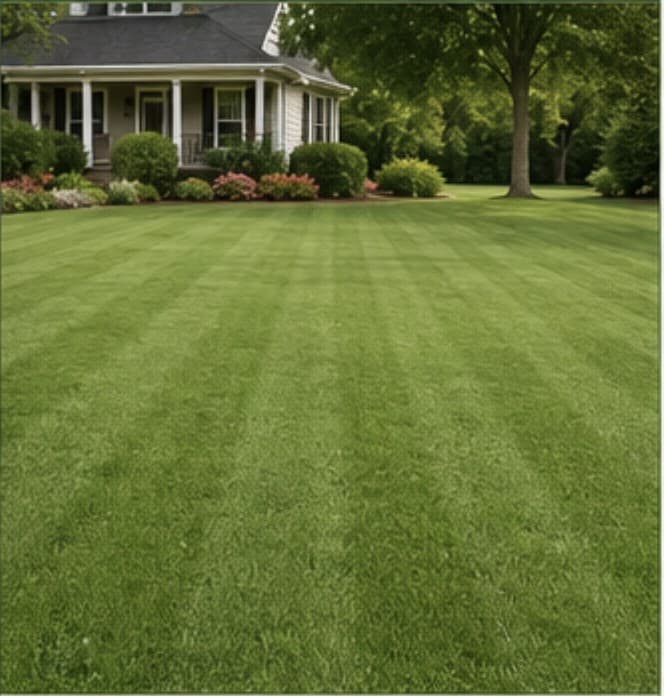
These are sequenced deliberately. Each one makes the next more effective, and doing them out of order wastes money. Fertilizer applied before a soil test is a guess. Weed control applied before mowing height is corrected is a treadmill.
| # | Fundamental | Why it comes here | Cost |
|---|---|---|---|
| 1 | Identify your grass type | Every number that follows — mowing height, watering, feeding month — changes with species | Free |
| 2 | Mow high, often, and sharp | The highest-impact change available, and you are already doing it weekly | Free |
| 3 | Water deeply, infrequently | Determines root depth, which determines drought and disease resilience | Free to lower |
| 4 | Test your soil | Turns fertilizer and lime from guesswork into a decision | Low |
| 5 | Feed on the right schedule | Only worth doing once you know your species and your soil | Moderate |
| 6 | Crowd out weeds | Largely a result of the five above, not a separate program | Low |
1. Identify Your Grass Type Before Anything Else
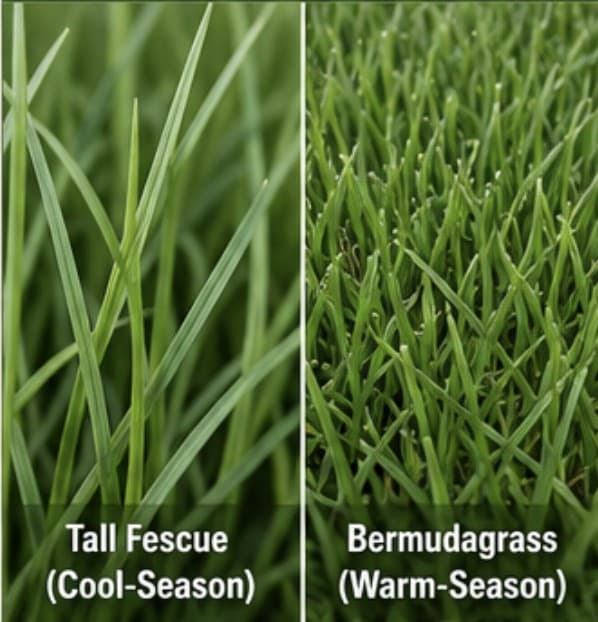
Nearly every specific recommendation in lawn care is species-dependent. Mowing height, fertilizer timing, drought response, even what a healthy dormant lawn looks like — all of it changes. Advice that does not name a grass type is advice you cannot act on safely.
The first split: cool-season or warm-season
- Cool-seasongrasses — tall fescue, Kentucky bluegrass, perennial ryegrass, fine fescue — dominate the northern US. They grow hardest in spring and fall, and struggle in peak summer heat.
- Warm-seasongrasses — bermudagrass, zoysiagrass, St. Augustinegrass, centipedegrass — dominate the South. They thrive in summer heat and go dormant and tan after frost.
A tan winter lawn in the South is usually dormant, not dead
Use our grass identification guide to narrow it down by blade width, growth habit, and colour, or compare species side by side in the grass types hub. If you truly cannot tell, your county extension office will identify a sample.
2. Mow High, Mow Often, Mow Sharp
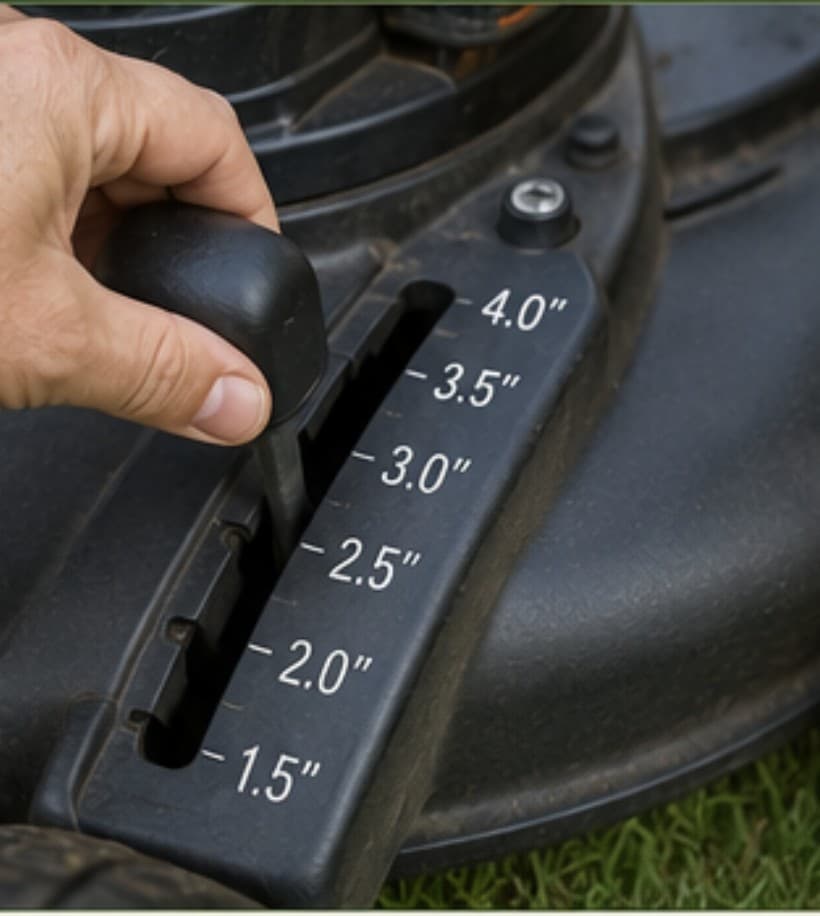
If you change one thing this season, change this. Cutting too short is the most common beginner mistake and it causes a cascade: shallower roots, more drought stress, more exposed soil, more weeds, more disease. Raising the deck fixes several problems at once and costs nothing.
The one-third rule
Never remove more than one-third of the blade height in a single mowing. Clemson Extension gives the working example: a centipede lawn kept at 2 inches should be cut when it reaches about 3 inches. Removing more than a third at once stalls root growth, which then forces more frequent watering to keep the plants alive through summer.
If the lawn got away from you, do not scalp it back in one pass. Raise the mowing height, cut, then lower it gradually over several mowings.
| Grass | Cutting height (inches) | Notes |
|---|---|---|
| Tall fescue | 2 - 3 winter, 3 - 3.5 summer | Raise in summer heat and in shade |
| Fine fescue | 1.5 - 2.5 winter, 2.5 - 3 summer | Best cool-season choice for shade |
| Perennial ryegrass | 1 - 2.5 | Fast-growing; needs frequent cutting |
| Kentucky bluegrass | 1.5 - 2.5 | Hold at or above 2 inches in hot, humid weather |
| Common bermudagrass | 1 - 2 | Tolerates the lowest cuts of the common lawn grasses |
| Hybrid bermudagrass | 0.5 - 1.5 | Reel mower recommended below about 1 inch |
| Zoysiagrass | 1 - 2 | Reel mower gives a noticeably cleaner cut |
| Centipedegrass | 1.5 - 2 | Low input; do not push it with nitrogen |
| St. Augustinegrass | 2.5 - 4 | Highest cut of the common warm-season grasses |
Mow higher when the grass is under stress
Sharpen the blade
A dull blade tears rather than cuts. The torn tips turn brown at the point of impact, giving the whole lawn a brown cast a day or two after mowing, and the wounded plants are slower to recover and more vulnerable to disease and insects. If your lawn looks off shortly after every mow, suspect the blade before you suspect a pathogen.
Leave the clippings
Clippings are free fertilizer. Clemson measures them at roughly 4 percent nitrogen, half a percent to 1 percent phosphorus, and 2 to 3 percent potassium — effectively a 4-1-3 fertilizer that returns to the soil at no cost. Following the one-third rule keeps clippings short enough to filter down rather than sit on top. Bag only when the grass got badly overgrown or you are removing diseased material.
3. Water Deeply and Infrequently
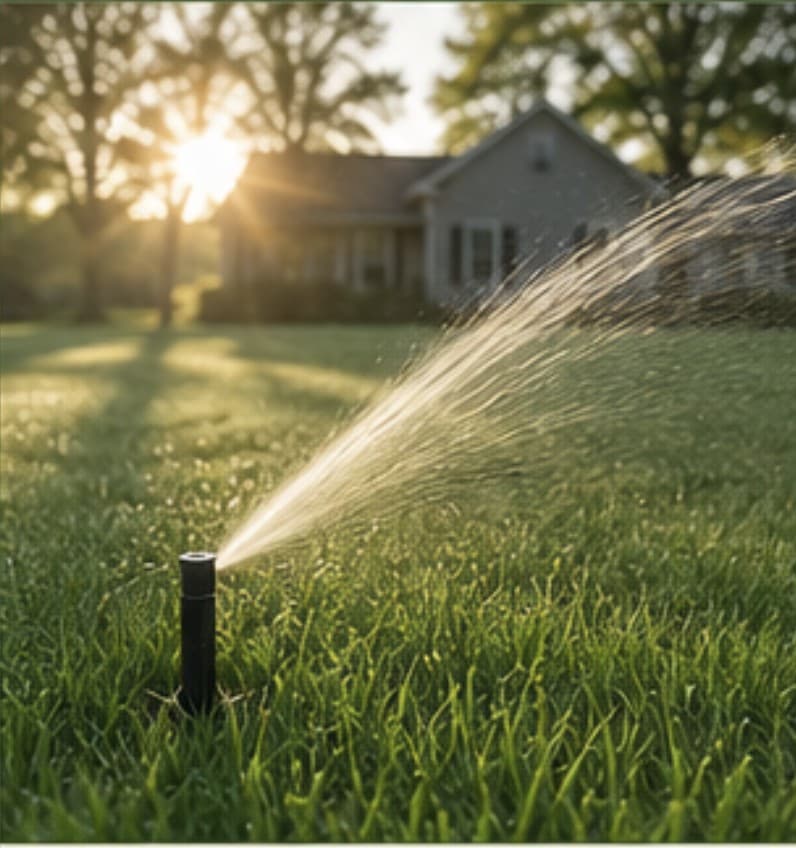
Light daily watering feels attentive and produces a fragile lawn. It keeps moisture at the surface, so roots stay at the surface, so the lawn cannot handle the first hot dry week. Deep and infrequent watering does the opposite — it pulls roots down after the moisture.
| Question | Answer | Source detail |
|---|---|---|
| How much per week? | About 1 inch total, rainfall included | Enough to wet the root zone to roughly 6 inches |
| How often? | Once weekly on clay; 2 - 3 lighter sessions on sand | Clay absorbs slowly — often under 0.5 in/hour |
| What is 1 inch? | About 640 gallons per 1,000 sq ft | Missouri Extension figure |
| When? | Early morning | Less evaporation loss; blades dry before nightfall |
| How do I measure it? | Straight-sided cans on the lawn while running | Time how long your sprinkler needs to fill 1 inch |
The tuna-can trick is the single most useful habit here. Put a few straight-sided cans around the lawn, run the sprinkler, and time how long it takes to collect an inch. You now know your sprinkler’s output and never have to guess again. Our watering calculator converts that into run time, and the watering guides cover seasonal adjustments.
Evening watering is the one timing mistake worth avoiding
4. Test Your Soil Before You Buy Anything
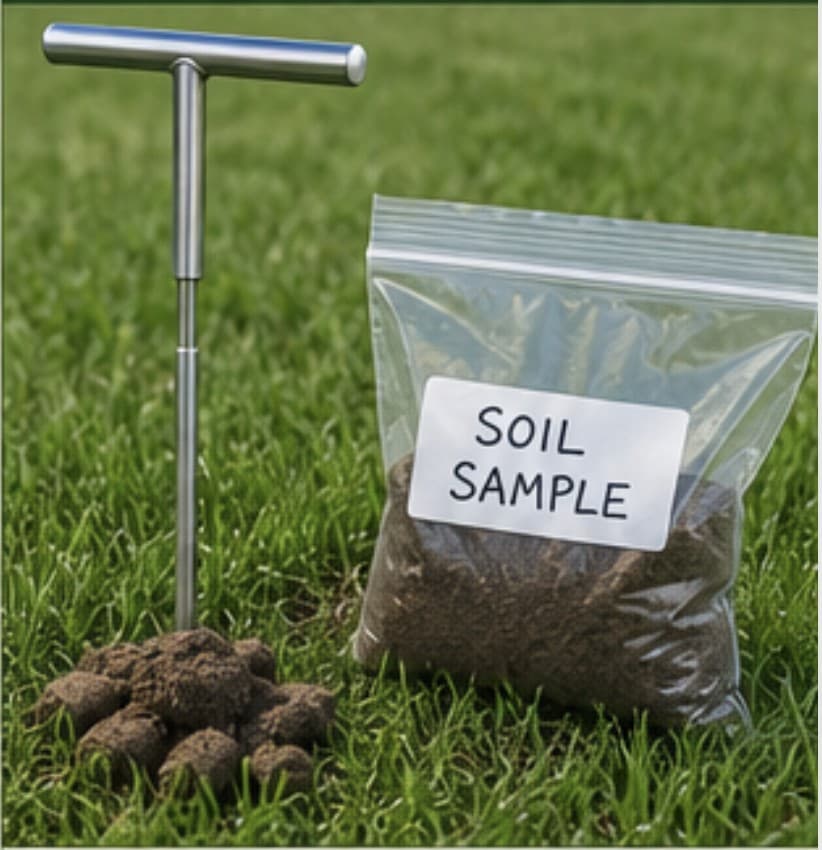
A soil test converts three expensive guesses — pH, phosphorus, potassium — into numbers. It is inexpensive through your state extension service and the report comes with turf-specific recommendations rather than generic advice.
Most turfgrasses do best at a pH of roughly 6.0 to 6.5. Outside that band, nutrients become progressively less available to the plant, which means fertilizer you have already paid for does less work. No amount of nitrogen fixes a pH problem.
Phosphorus is often already sufficient
5. Feed on Your Grass Type’s Schedule, Not the Calendar
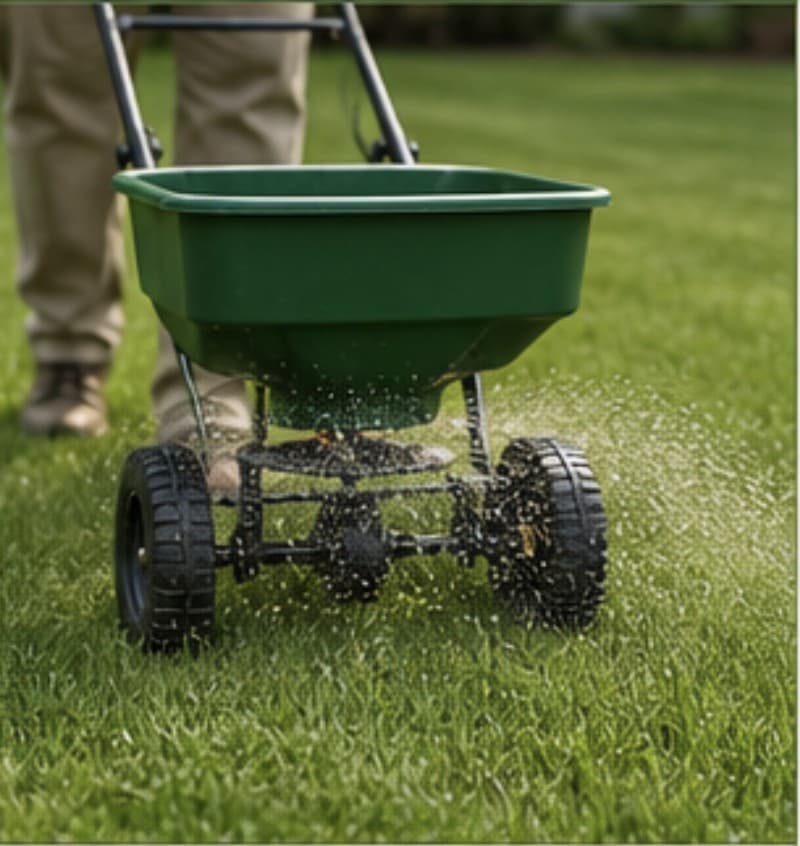
Two questions decide fertilizing: how much per year, and when. Both have real answers, and both are commonly overshot.
How much
Nitrogen drives lawn fertilizer programs. University of Minnesota Extension scales the annual rate to how the lawn is actually managed, which is a far more useful frame than a number on a bag.
| How you manage the lawn | Nitrogen per 1,000 sq ft per year | Applications |
|---|---|---|
| Low: no watering, clippings returned | 0.5 - 1 lb | One, in September |
| Medium: some watering, clippings returned | 0.5 - 2 lb | Two: September and May-June |
| Medium: some watering, clippings removed | 1.5 - 3 lb | Three: August, September, May-June |
| High: watered, clippings returned | 1.5 - 3 lb | Three: August, September, May-June |
| High: watered, clippings removed | 2.5 - 4 lb | Four: August, September, early October, May-June |
Ranges reflect soil organic matter — richer soils need the lower end. Note how much work returning clippings does: it can cut the annual requirement by roughly a pound. Single applications should generally not exceed 1 lb of nitrogen per 1,000 sq ft. Our fertilizer calculator converts a target rate into an actual bag weight.
When
Feed when the grass is actively growing. For cool-season lawns the fall applications carry the most weight, with a lighter spring feeding. For warm-season lawns the window is late spring through summer. Fertilizing a dormant lawn feeds weeds and risks runoff.
Skip weed-and-feed products
6. Crowd Weeds Out Instead of Chasing Them
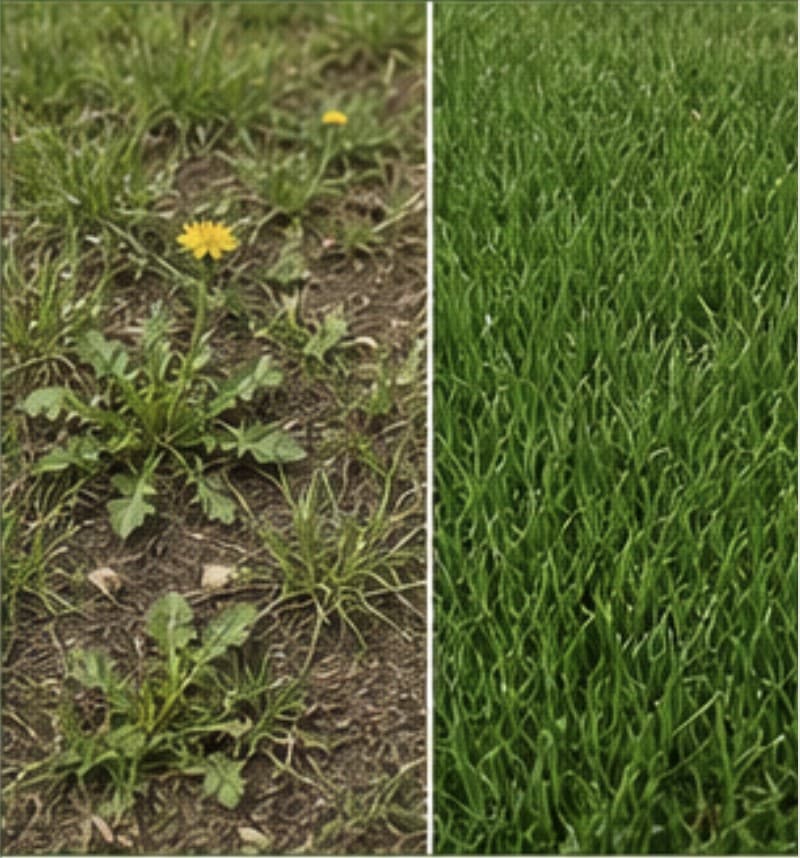
Weeds are usually a symptom. Weed seed needs light to germinate, and dense turf mown at a proper height denies it. Proper mowing is itself a weed control practice — a thick stand outcompetes weeds for light and nutrients, while a weak, thin one lets them in.
This is why the order in this guide matters. If you spray a lawn that is mown at 1.5 inches and watered lightly every evening, you will be spraying it again next year. Fix the conditions and the pressure drops on its own.
- Spot-treat scattered weeds rather than blanket-spraying an entire lawn.
- Apply herbicides only to actively growing weeds, and follow the label — it is the law.
- Overseeding thin areas does more long-term good than another herbicide pass. See overseeding.
- Persistent weeds in the same spot every year usually indicate a site problem — compaction, shade, or drainage — not a herbicide failure. Our weed prevention guide covers the longer program.
What the First Year Actually Looks Like
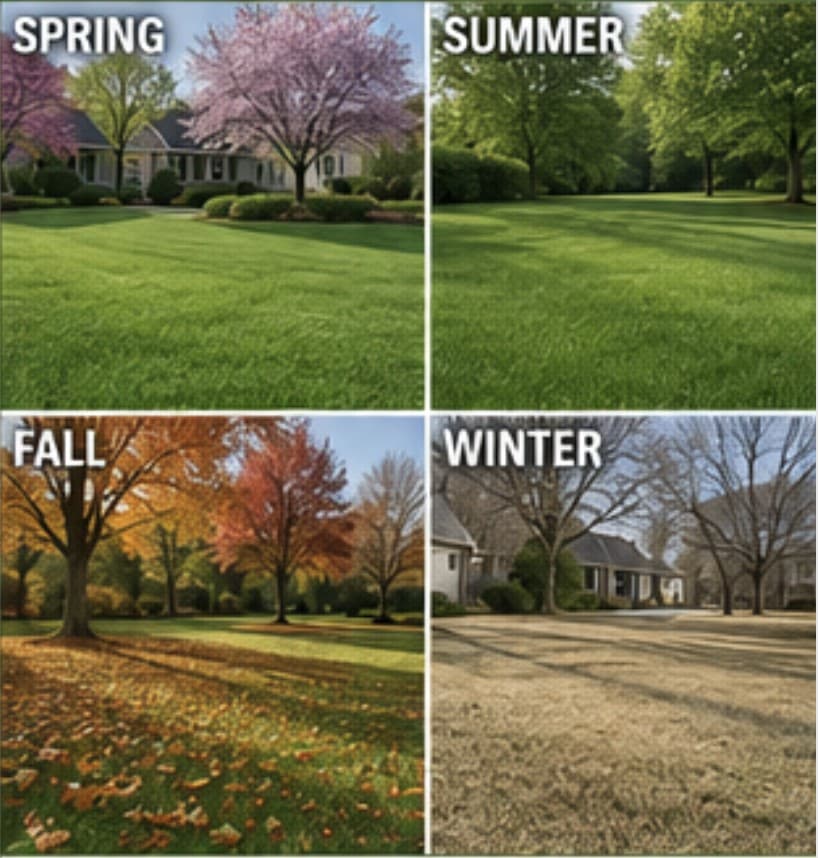
You do not need to do everything at once. A realistic first year for a cool-season lawn looks roughly like this — shift it earlier in the season for warm-season grasses, whose peak growth is summer rather than fall.
| When | Do this | Skip this |
|---|---|---|
| Right now | Identify your grass type. Raise the mower. Sharpen the blade. | Buying anything |
| This month | Send a soil sample to your extension office | Fertilizer, until results arrive |
| Spring | Mow weekly at the correct height; spot-treat weeds after three mowings | Heavy spring nitrogen on cool-season turf |
| Summer | Raise the deck further; water deeply once or twice weekly, early morning | Fertilizing cool-season grass in peak heat |
| Early fall | The main feeding window for cool-season lawns; overseed thin areas | Dethatching a lawn that does not need it |
| Late fall | Final mow, keep leaves off the turf | Watering a dormant lawn |
Month-by-month specifics for your region are in our seasonal and regional lawn care hub.
Common Mistakes
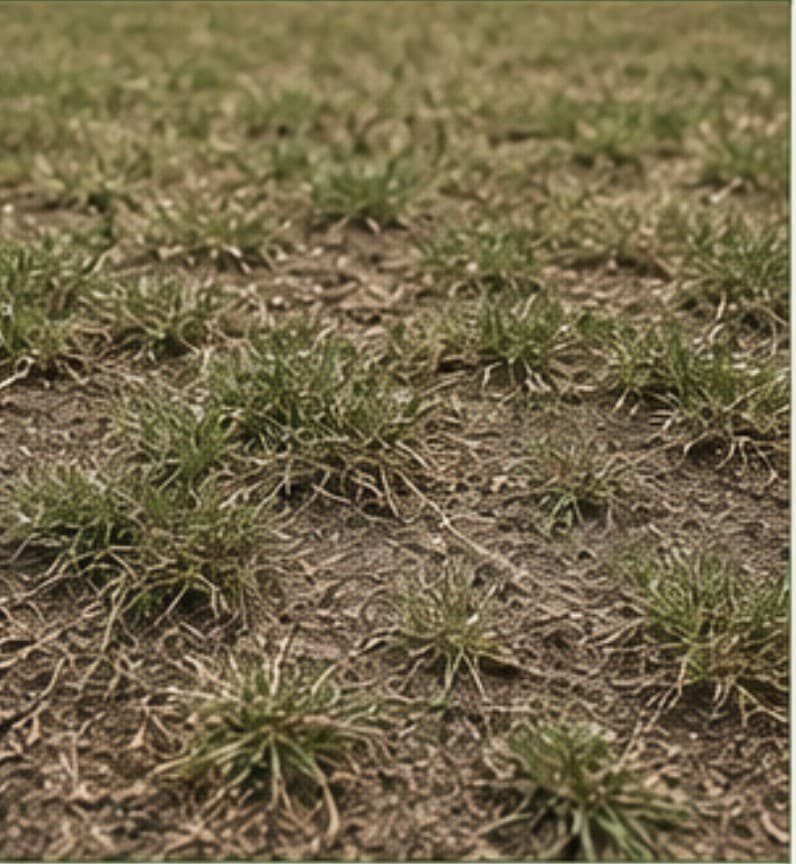
- Mowing too short. The single most damaging habit. Short grass means shallow roots, exposed soil, and weed seed getting the light it needs.
- Watering a little every day. Trains roots to stay at the surface and keeps blades wet, which favours disease.
- Watering in the evening. Hours of wet foliage overnight in warm weather is close to ideal conditions for turf disease.
- Buying fertilizer before a soil test. You cannot know what is short, and pH problems make the purchase partly wasted anyway.
- Over-applying nitrogen. More than about 1 lb per 1,000 sq ft in one go risks burn and pushes soft growth at the expense of roots.
- Fertilizing dormant grass. Feeding a warm-season lawn in winter or a cool-season lawn in peak summer heat mostly feeds weeds.
- Using weed-and-feed as a default. Wrong timing for at least one of the two products, almost every time.
- Mowing with a dull blade. Torn tips brown off and invite disease. Most people never sharpen.
- Bagging clippings by habit. Throwing away a free 4-1-3 fertilizer and raising your own nitrogen requirement.
- Dethatching or aerating on a schedule. Both are corrective. Check whether you actually have compaction or a thatch layer over half an inch first.
- Treating dormancy as death. Warm-season grass in winter and cool-season grass in a dry August are both normal.
- Expecting results in weeks. Mowing changes show quickly; soil and fertility changes take a season or more.
Expert Tips
- Write your grass type on a label inside the mower deck cover. Every future decision starts with that answer, and it is the thing beginners most often forget.
- Buy a second mower blade rather than sharpening one. Swap it out in minutes, sharpen the spare at your convenience, and you stop putting it off.
- Set the deck one notch higher than feels right. Almost nobody errs on the side of too tall, and the top of the range is where you want to be under stress anyway.
- Calibrate your sprinkler once with straight-sided cans. Ten minutes of measuring replaces years of guessing.
- Photograph the lawn on the first of each month. Improvement at this pace is invisible day to day and obvious across a season.
- Test soil every three years, not every year. pH and nutrient levels move slowly; annual testing rarely changes a decision.
- Vary your mowing direction each cut. Reduces soil compaction in wheel tracks and stops the grass leaning permanently one way.
- Keep a note of what you applied and when. When something goes right or wrong next year, that record is the only way to know why.
Frequently Asked Questions
Where to Start This Week
Do these in order. The first three cost nothing and account for most of the improvement you will see.
- Identify your grass type using our identification guide.
- Raise your mower deck to the top of that species’ range and sharpen the blade.
- Put out a few straight-sided cans and time how long your sprinkler takes to deliver 1 inch.
- Order a soil test through your county extension office and wait for it before buying anything.
- When results arrive, set an annual nitrogen target with the fertilizer calculatorand apply it in your grass type’s growing season.
- Reassess weeds after one full season of corrected mowing and watering — there will be fewer of them than you expect.
When to bring in help
About the Author
Jack is a lawn care researcher and former landscaping crew lead with 20+ years working transition-zone turf. He writes every guide here from university extension publications and turfgrass research rather than product marketing — after learning the hard way that most of what gets passed around on job sites is backwards.
Have a question or topic suggestion? Get in touch.
Sources and further reading
- Clemson Cooperative Extension — Mowing Lawns (HGIC 1205) (one-third rule, mowing heights by species, blade sharpness, clipping nutrient content)
- University of Minnesota Extension — Fertilizing Lawns (annual nitrogen rates by maintenance level, pH range, weed-and-feed guidance, burn)
- University of Missouri Extension — Home Lawn Watering Guide (weekly water volume, gallons per 1,000 sq ft, soil-type frequency)
- Clemson Cooperative Extension — Conservative Turfgrass Irrigation (deep and infrequent irrigation, rooting depth targets)
- Purdue Extension — Mowing, Dethatching, Aerifying (AY-8-W) (cool-season mowing heights, when dethatching and aeration are warranted)
Extension recommendations are calibrated to the state that publishes them. Where this guide gives a range, your local extension office can narrow it to your county and grass type. How we research and review guides is set out in our editorial policy.